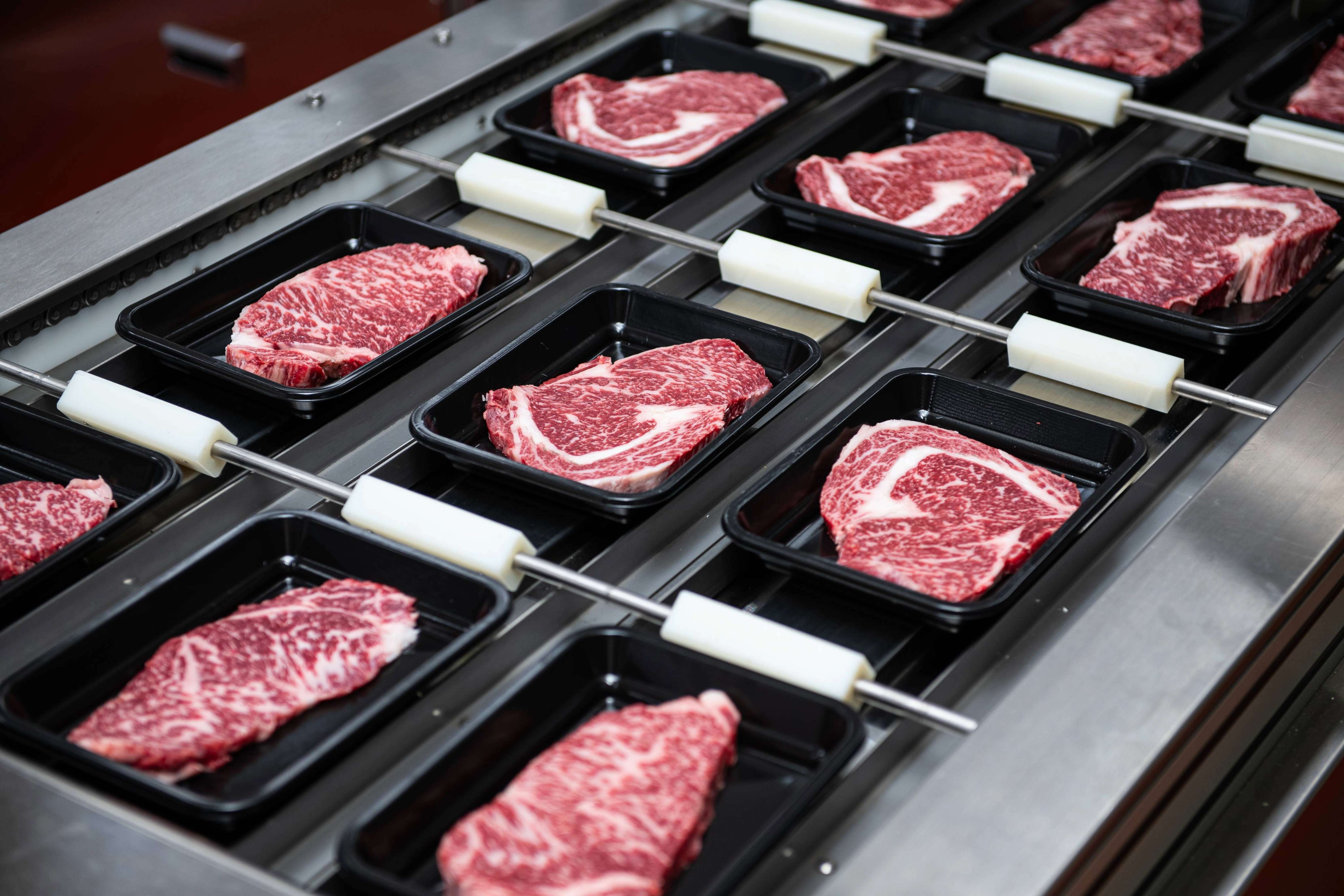

As global markets, retailers, and consumers increasingly prioritise sustainable practices, WA food and beverage manufacturers face rising expectations to reduce emissions, improve energy efficiency, and demonstrate climate responsibility.
DPIRD, in partnership with RSM Australia, is undertaking the Energy Snapshot Study – a new initiative to understand energy use, greenhouse (GHG) emissions, and decarbonisation readiness across Western Australia's food and beverage manufacturing sector.
The study will identify opportunities and barriers to decarbonisation, providing manufacturers with a clear picture of their energy consumption and emissions, revealing potential areas for energy-efficiencies and cost-savings for their business.
Your participation is important to the sector
Participating business will receive, at no charge,:
- A personalised carbon peer benchmark report
Understand how your business compares across the industry - A WA food and beverage manufacturing insights report
Access study findings, future industry opportunities, industry emissions benchmarks and other information to help drive your emissions strategies - An invitation to the exclusive industry launch event (mid-2026)
Hear the outcomes of the study and connect with industry peers - A carbon footprint report (limited spots)
A limited number of eligible businesses can express their interest in receiving assistance to calculate their business’ energy use and greenhouse gas emissions. Valued at several thousand dollars in the commercial marketplace, these reports include insights and recommendations to drive efficiencies and reduce costs.
Your participation will provide valuable insights that will:
- establish a clear picture of emissions sources and energy profiles across food and beverage subsectors – from dairy, seafood and meat, to beverages, baked goods, and packaged foods
- identify opportunities and barriers to decarbonisation, for regional and metropolitan manufacturers
- build resilience, cut costs, and future-proof operations in line with emerging sustainability standards and consumer demand
- reveal potential areas for energy efficiency and cost savings
- inform the development of future programs that support the sector to increase energy efficiency, while increasing industry competitiveness and resilience.
All feedback is valuable and will contribute towards providing an accurate understanding of the sector.
Participate in the Energy Snapshot Study
This survey is open to all WA food and beverage manufacturers regardless of their energy consumption and emissions journey.
It takes approximately 10-15 minutes and responses are strictly confidential.
About the Energy Snapshot Study
No. Participation in the survey, and any follow-up assistance offered by RSM Australia as part of this DPIRD-funded study, is completely free of charge to businesses from WA's food and beverage manufacutring sector.
All WA food and beverage manufacturers are invited to participate by completing the survey. Participants can also express their interest to receive a comprehensive carbon assessment report.
To start off the process, complete the confidential survey as listed on this page, or click below.
Over the course of the survey, you will have the opportunity to express your interest for a comprehensive carbon assessment report specifically tailored to your business.
You will need to provide your business profile, current energy practices, drivers, barriers and any opportunities for decarbonisation.
If you wish to apply for a carbon assessment report, you will be prompted for additional information regarding emissions tracking within the survey. It is not essential to provide this information to participate.
Regardless of where you are on your sustainability journey, we encourage all food and beverage manufacturers to take part. All feedback is valuable to the study and contributes to the accuracy of the industry snapshot.
The study aims to gather a representative sample of key subsectors (e.g. dairy, meat processing, brewing, baking, seafood processing, beverage manufacturing etc.) and regions. This is essential to build an accurate, sector-wide carbon footprint and set relevant benchmarks.
Businesses that are successful in the expression of interest process, will receive one of 30 comprehensive carbon assessment reports, or one of the 20 ‘lite’ version reports. Successful businesses will be contacted directly to confirm their eligibility, availability and the level of support they will receive.
Yes, free support will be provided to participants where needed.
This support will be prioritised based on the sampling framework, the specific needs of each business, and the available project budget.
Support may include assistance with:
- calculating Scope 1 & 2 emissions
- identifying key emissions sources
- guidance on data collection.
A carbon assessment allows businesses to:
1. View their carbon footprint as a financial risk assessment tool
Understanding carbon footprint is the first step in identifying hidden cost drivers such as energy inefficiencies, high refrigerant leakage, or reliance on emissions-intensive transport.
2. Prepare for evolving buyer expectations
Major retailers and consumers in Australia and overseas increasingly expect suppliers to provide information about their carbon footprint or sustainability initiatives. Inaction could affect your ability to access certain distributors and retailers.
This no-cost analysis can help future-proof operations, save significant amounts in potential lost revenue or compliance costs.
3. Quantify potential operational savings
A free Scope 1 & 2 carbon footprint can uncover savings in fuel use, refrigeration losses, or grid energy reliance – areas where food and beverage manufacturers often waste 5 to 15% of their energy budget.
4. Increase access to new markets
A carbon assessment also provides credible supporting evidence for entering new markets and the ability to quantify energy use, as new and existing markets become more regulated.
For questions on the Energy Snapshot Study, participation, or the survey process, contact RSM Australia.
The study will run until 15 April 2026, and all technical support will be delivered within this time.
Data will be aggregated to develop sector-wide insights and recommendations, with all responses kept strictly confidential and anonymised. Participating businesses will also receive personalised benchmarking insights without disclosing individual company details.
On a sector-wide level, the data from the study will provide insights that reveal subsector benchmarks and will guide the WA Government in developing new initiatives that support the industry.
Access to survey data will be limited to DPIRD and RSM Australia for the purposes of delivering the Energy Snapshot Study.
After the study is completed, data will continue to be held by DPIRD and RSM Australia in accordance with applicable data retention and record-keeping requirements.
All data will be stored securely and managed in accordance with relevant privacy legislation and information security requirements. Appropriate safeguards will be in place to protect the confidentiality of participating businesses.
Yes, businesses yet to commence on sustainability work can participate in the survey.
The goal is to capture a wide range of experiences and readiness levels. All input is valuable.
About greenhouse gas emissions and carbon footprinting
A carbon footprint measures the total greenhouse gas (GHG) emissions caused directly and indirectly by a business or product.
For manufacturers, it helps identify where emissions are coming from - such as energy use, refrigeration, packaging, or transportation - and where efficiency and sustainability improvements can be made.
Different manufacturing processes have unique emissions profiles.
For example:
- Dairy and meat processors often have high refrigeration and wastewater-related emissions.
- Bakeries and snack producers may have higher gas usage for ovens.
- Breweries and beverage bottlers can see emissions from fermentation and packaging.
Industry benchmarking is valuable as it helps contextualise your performance.
Understanding your business' carbon footprint:
- identifies cost-saving opportunities through energy efficiency
- supports grant applications and ESG reporting
- improves supply chain competitiveness
- future-proofs your operations against climates-related regulations
- demonstrates leadership in sustainability.
Emissions are classified as:
- Scope 1: Direct emissions from owned or controlled sources (e.g. gas boilers, company vehicles).
- Scope 2: Indirect emissions from purchased electricity, steam, heating and cooling.
- Scope 3: All other indirect emissions in the value chain (e.g. upstream agriculture, packaging, distribution).
The Energy Snapshot Study focuses on Scope 1 and 2 emissions.
A carbon footprint is typically calculated by collecting data on energy use, fuel consumption, refrigerants, and other emission sources.
This data is then converted into carbon dioxide equivalents (CO₂-e) using recognised emission factors from sources like the National Greenhouse Accounts (NGA) Factors.
Required data sources include:
- utility bills (electricity, gas, etc.)
- fuel use (diesel, LPG, petrol)
- refrigerant types and top-ups
- production or operational data for emissions intensity metrics.
Previously, only large emitters have been to required to report under the National Greenhouse and Energy Reporting (NGER) Scheme.
However from 2025, certain companies are also now required to disclose their greenhouse gas (GHG) emissions, climate-related risks, and opportunities under the Australian Accounting Standards Board (AASB) S2, which aligns with the IFRS S2 climate-related disclosure standards.
This relatively new requirement will apply in phases based on company size and financial thresholds, starting with large listed and unlisted entities. Even if a business is not yet in scope, there is growing pressure from supply chains, customers, and investors for all businesses to improve emissions transparency and demonstrate credible emissions, especially in export-oriented, retail, and resource-intensive sectors.
Contact us
-
DPIRD Investment