

As global markets, retailers, and consumers increasingly prioritise sustainable practices, Western Australian food and beverage manufacturers face rising expectations to reduce emissions, improve energy efficiency, and demonstrate climate responsibility.
In 2026, DPIRD in partnership with RSM Australia, undertook the Energy Snapshot Study - an initiative to understand energy use, greenhouse (GHG) emissions, and decarbonisation readiness across Western Australia's food and beverage manufacturing sector.
Food and beverage manufacturers were surveyed to assess their operational activities and energy use. Businesses also had the opportunity to receive assistance with calculating their carbon footprint, along with personalised recommendations to improve energy efficiency and reduce GHG emissions. Emissions analysis focused on Scope 1 emissions from fuels, refrigerants and other sources controlled by a business, and Scope 2 emissions from purchased electricity.
The Study indentified key findings such as:
- Cost savings are the strongest driver of energy efficiency action.
- Businesses know where improvements are needed but face cost, data and capability barriers.
- Better energy management can quickly improve efficiency, reduce emissions and strengthen competitiveness.
Energy Snapshot Study
The Study captured insights from 124 businesses spanning 10 subsectors across WA’s food and beverage manufacturing sectors. Together, they demonstrate the statewide reach of the industry, with more than half of the respondents based in regional WA and representation across all regions.
Subsector reports
The Energy Snapshot Study provided detailed analysis of 4 sub-sectors: beer, wine, bakery product, and meat processing and manufacturing. These subsectors were selected partly due to participant numbers, which provided a sufficient evidence base for meaningful analysis.
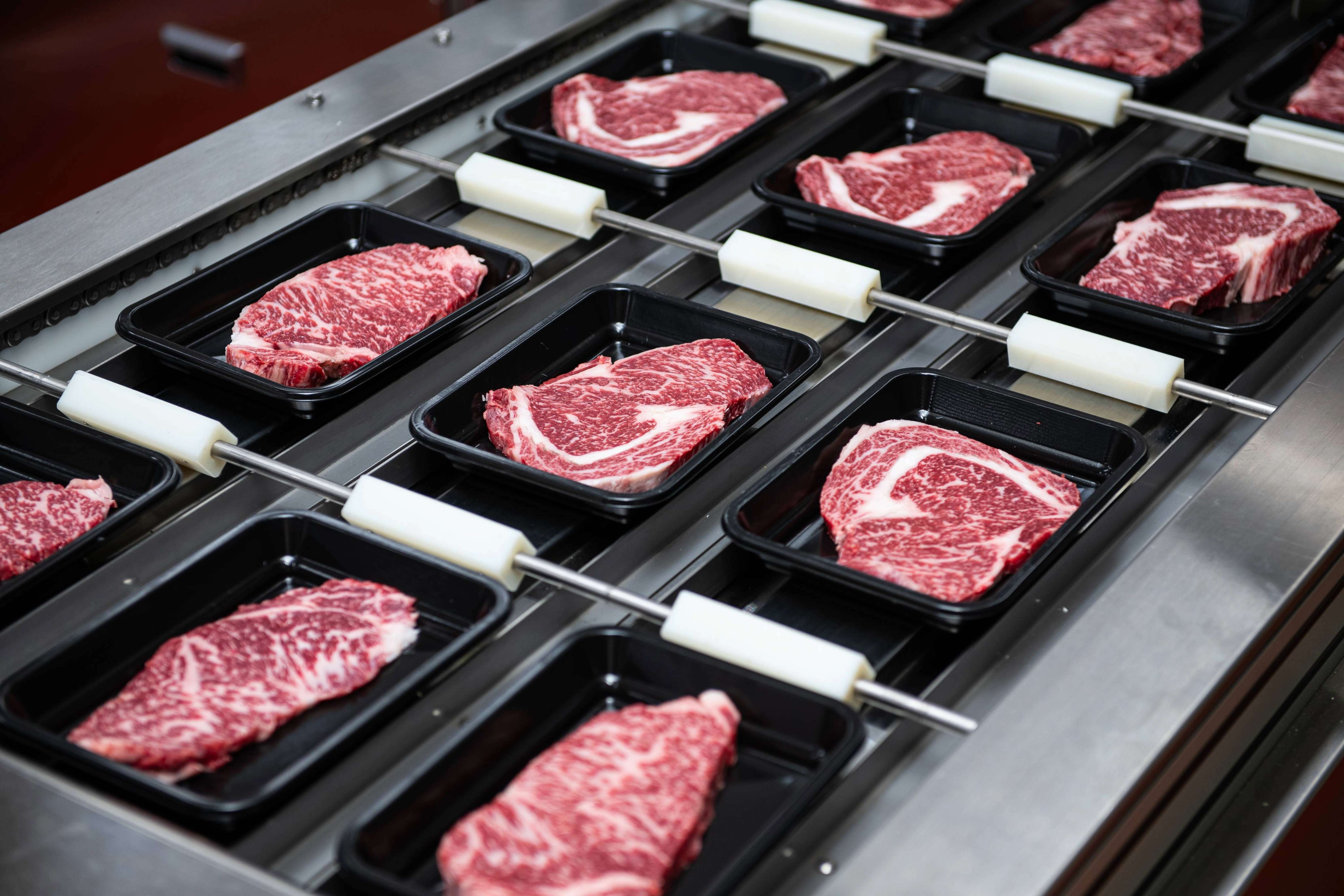
Meat processing and manufacturing
About greenhouse gas emissions and carbon footprinting
A carbon footprint measures the total greenhouse gas (GHG) emissions caused directly and indirectly by a business or product.
For manufacturers, it helps identify where emissions are coming from - such as energy use, refrigeration, packaging, or transportation - and where efficiency and sustainability improvements can be made.
Different manufacturing processes have unique emissions profiles.
For example:
- Dairy and meat processors often have high refrigeration and wastewater-related emissions.
- Bakeries and snack producers may have higher gas usage for ovens.
- Breweries and beverage bottlers can see emissions from fermentation and packaging.
Industry benchmarking is valuable as it helps contextualise your performance.
Understanding your business' carbon footprint:
- identifies cost-saving opportunities through energy efficiency
- supports grant applications and ESG reporting
- improves supply chain competitiveness
- future-proofs your operations against climates-related regulations
- demonstrates leadership in sustainability.
Emissions are classified as:
- Scope 1: Direct emissions from owned or controlled sources (e.g. gas boilers, company vehicles).
- Scope 2: Indirect emissions from purchased electricity, steam, heating and cooling.
- Scope 3: All other indirect emissions in the value chain (e.g. upstream agriculture, packaging, distribution).
The Energy Snapshot Study focuses on Scope 1 and 2 emissions.
A carbon footprint is typically calculated by collecting data on energy use, fuel consumption, refrigerants, and other emission sources.
This data is then converted into carbon dioxide equivalents (CO₂-e) using recognised emission factors from sources like the National Greenhouse Accounts (NGA) Factors.
Required data sources include:
- utility bills (electricity, gas, etc.)
- fuel use (diesel, LPG, petrol)
- refrigerant types and top-ups
- production or operational data for emissions intensity metrics.
Previously, only large emitters have been to required to report under the National Greenhouse and Energy Reporting (NGER) Scheme.
However from 2025, certain companies are also now required to disclose their greenhouse gas (GHG) emissions, climate-related risks, and opportunities under the Australian Accounting Standards Board (AASB) S2, which aligns with the IFRS S2 climate-related disclosure standards.
This relatively new requirement will apply in phases based on company size and financial thresholds, starting with large listed and unlisted entities. Even if a business is not yet in scope, there is growing pressure from supply chains, customers, and investors for all businesses to improve emissions transparency and demonstrate credible emissions, especially in export-oriented, retail, and resource-intensive sectors.
Contact us
-
DPIRD Investment