
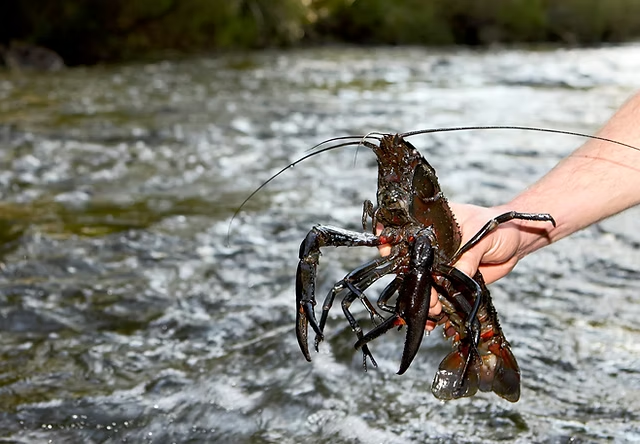
In 2025, the Cook Labor Government committed $3 million to boost marron populations in South West dams, including Harvey Dam, Logue Brook Dam and Wellington Dam.
The project aims to boost dam productivity, safeguard marron populations against a changing climate and reinvigorate recreational fishing experiences.
While some of the factors threatening the future of the marron fishery can be managed via traditional fisheries controls, habitat enhancement and restoration methods are evidence-based, and expected to play a positive role in supporting the resilience and abundance of marron stocks into the future.
The project is being led by DPIRD.
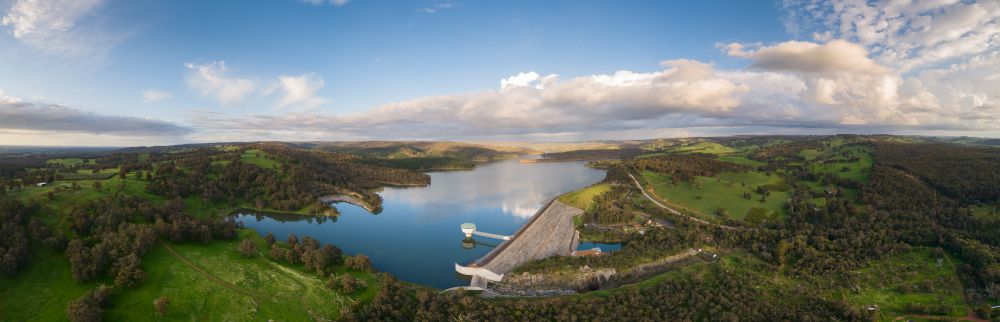
Harvey Dam is among the 3 locations selected for marron habitat enhancement. It is a premier location among freshwater anglers for targeting rainbow and brown trout, redfin perch and marron
(Image source: Haydn Jones, courtesy of the Shire of Harvey).
View the dam locations in the interactive map below
Addressing habitat limitations
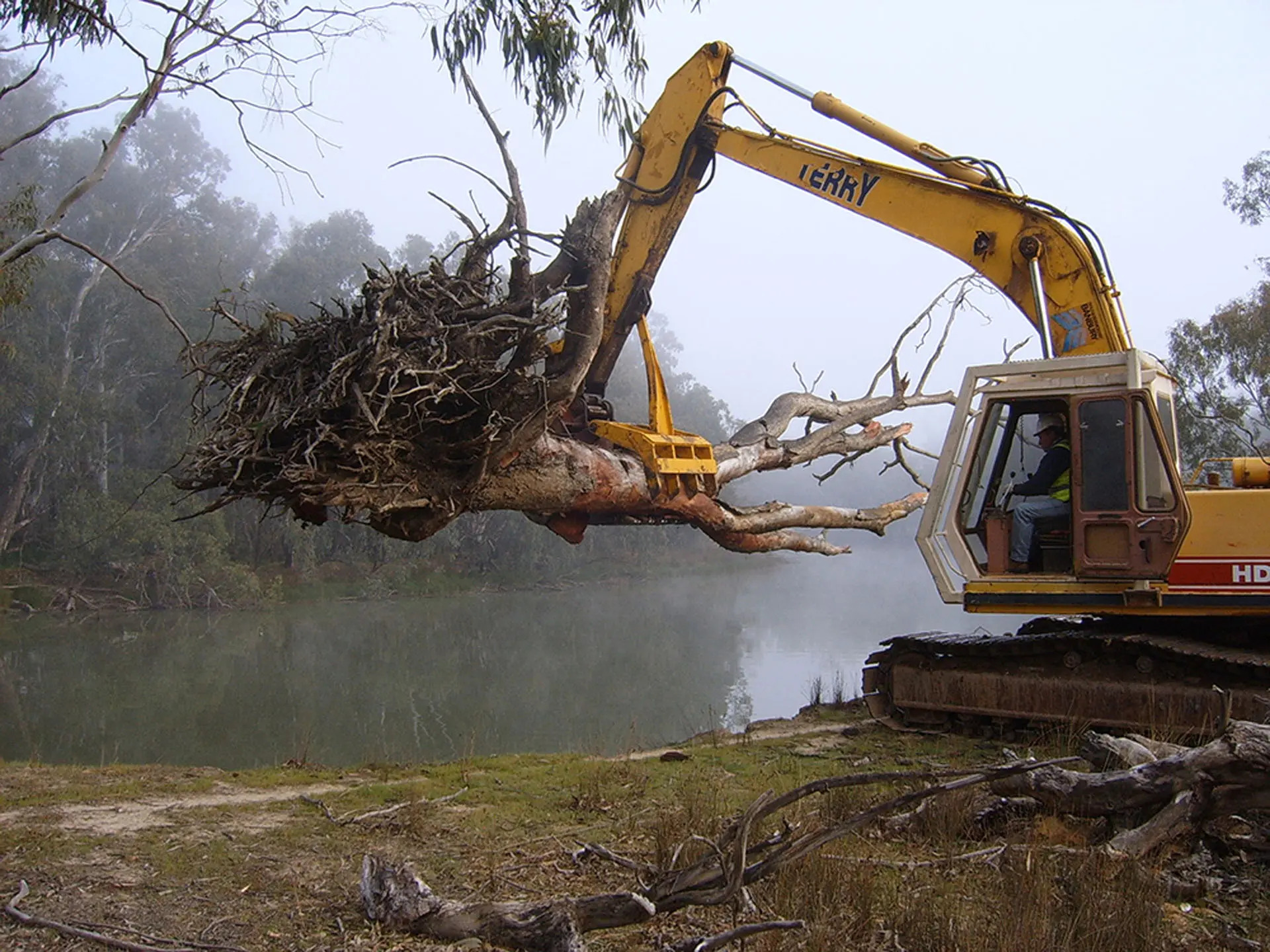
Historically, public drinking water source areas and irrigation dams in WA have been stripped of in-water structure, including large woody debris and riparian (riverbank) vegetation, in an effort to reduce overall maintenance costs. However, this has resulted in the removal of valuable habitat and food sources for native aquatic fauna – including marron.
Reinstating in-water structure is an effective, evidence-based way we can increase marron habitat in key locations. Large woody debris and other naturally occurring materials are expected to play a positive role in supporting the resilience and abundance of marron stocks into the future. For example, the root balls of native trees offer complex hide habitat for juveniles, while logs can provide physical protection for larger organisms. Materials such as rock rubble may provide significant habitat complexity to support marron throughout all life stages.
Project updates
November 2025
DPIRD’s Recreational Fishing Science team reports on estimates of participation, effort and catch in the South West WA recreational marron fishery.
June 2025
- Recfishwest welcomes the State Government commitment to boost the WA marron fishery through habitat enhancement.
- Fisheries Minister Jackie Jarvis announces $3 million to increase marron numbers in South West dams.
- DPIRD FisheriesWA Facebook post announcing the project.
More info about marron
The marron fishery has a long history in WA and for many freshwater fishers, the month-long summer season is a premier period in the recreational fishing calendar each year. Annually, there are around 10,000 recreational marron fishing licence holders, which is significant given the short duration of the season.
The marron fishery is managed through size and bag limits, a specific marron licence, possession limits, gear restrictions, and a season closure.
Different areas have different requirements, so check out the latest Marron Recreational Fishing Guide before heading out.
Marron are endemic to South West WA and are the third largest freshwater crayfish in the world. They can grow up to 40 cm in length, and over 2 kg in weight. As omnivores, they play a significant ecological role as nutrient recyclers in freshwater ecosystems by consuming detritus, plant material, microbes, and small invertebrates.
While there are 2 separate species of marron in Western Australia, including the critically endangered ‘hairy’ marron (Cherax tenuimanus), the recreational marron fishery is solely comprised of the ‘smooth’ marron (Cherax cainii). Through translocation, the range of smooth marron has extended to as far north as the Hutt River near Geraldton and as far south and east as Esperance.
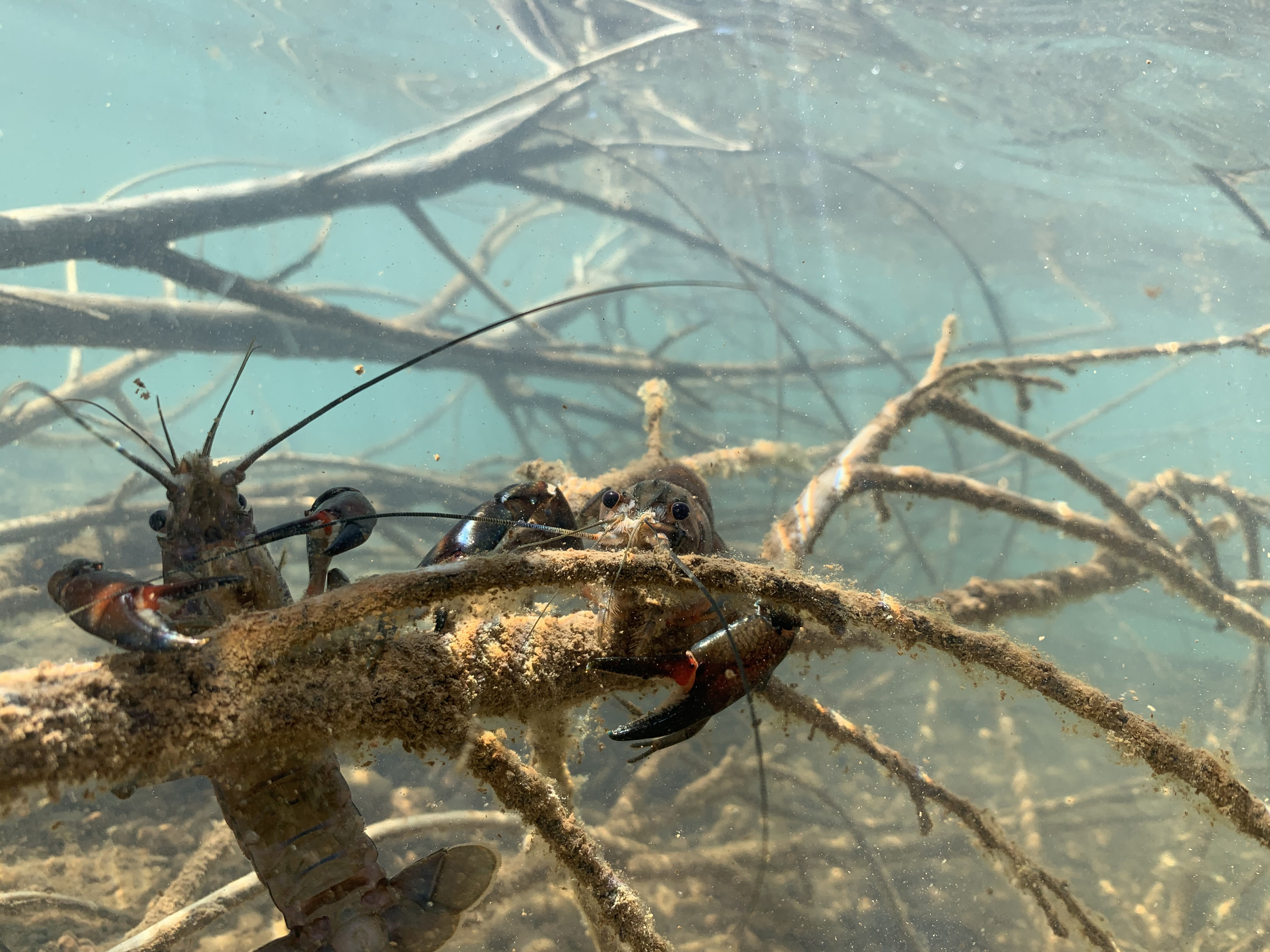
Marron prefer cool freshwater systems with complex habitat, particularly large woody debris, which provides both shelter from predation, but also food sources through attached biota.
Annual spawning occurs in early spring, with individual females carrying up to 1,200 eggs. Size at sexual maturity has been shown to vary among populations, but is typically achieved between 2-3 years old.
Marron are most active during the warmer months when somatic growth is also at its highest, contributing to optimised catches during the summer recreational only marron fishing season in WA.
The primary function of aquatic habitat enhancement is to provide new habitat to support increased production of important and key species. Habitat enhancement is a good option for boosting marron numbers in South West dams because it can be tailored to suit the biological and environmental needs of specific target species. This includes marron, which prefer complex, submerged structures that offer protection from predation, shading and food.
Using underwater structures in freshwater habitat enhancement also provides productivity benefits to lower order consumers, including the development of nutrient rich biofilms, which marron feed on. Introducing habitat structures informed by science will support the key life stages of marron, including improved breeding outcomes. This boosts recreational fishing opportunities for those targeting this iconic species.
Project partners
-
State Government

-
Recfishwest
-
Water Corporation

-
OzFish Unlimited

-
Harry Butler Institute

Frequently asked questions
The 3 proposed dams are among the most popular marron fishing locations in Western Australia according to the most recent estimates of participation, effort and catch in DPIRD’s Fisheries Research Report for the Recreational Marron Fishery.
Despite the considerable fishing effort in these locations during marron season, these reservoirs are lacking sufficient complex habitat to support thriving and enduring marron stocks.
This means that improving habitat in these 3 locations will have the greatest impact and support better marron fishing experiences for the greatest number of recreational fishers.
Stocking marron into an already habitat limited environment is unlikely to be effective long term due to inadequate habitat availability, likely resulting in exposure to predators and increased competition due to resource constraints.
Large-scale habitat enhancement specifically designed to increase marron numbers has not previously been undertaken in WA.
There have been some small-scale habitat enhancement trials; primarily aimed at testing the suitability of material types as marron ‘hides’ and particularly within the aquaculture industry.
In 2024, the Harvey River Restoration Taskforce and project partners installed 6 large wooden snags and 9 ‘Fish Hotels’ in the Harvey River as part of a rejuvenation project. While this project resulted in the installation of suitable marron habitat, it was relatively small scale and was also designed to support freshwater fish populations.
This project is intended to be the first large-scale habitat enhancement initiative focused specifically on increasing marron carrying capacity in freshwater ecosystems.
The project is scheduled for completion in late 2027, with an ongoing monitoring program designed to assess the effectiveness of habitat enhancement at each location.
More information
-
Recreational marron fishing guidepdf (1.37 MB)