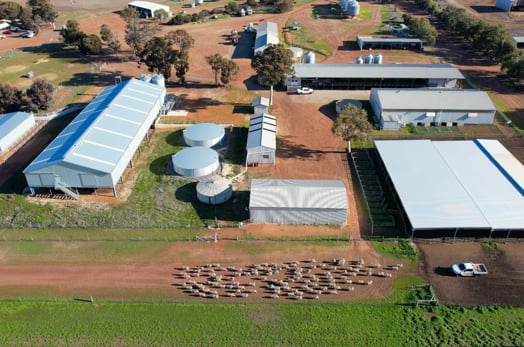
In 2020 the Western Australian Government committed $4.24 million towards achieving this goal of KRS becoming carbon neutral by 2030. The project will serve as a demonstration site, showcasing practical and effective methods for broadacre farmers in Western Australia to adopt farming practices that reduce greenhouse gas emissions through mitigation.
Understanding KRS emissions
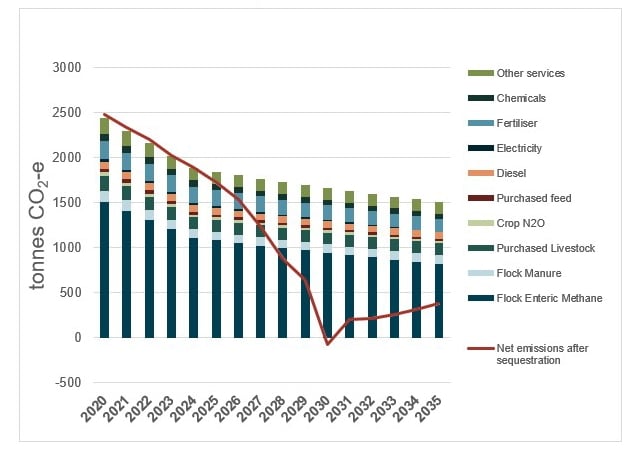
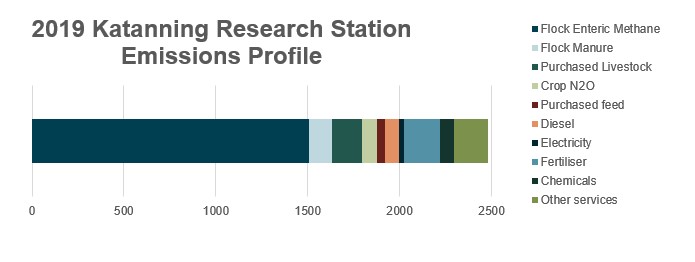
In 2019, the department undertook a baseline farm carbon account and developed an emissions reduction strategy to achieve carbon neutrality for the research station by 2030. The 2019 baseline account calculated 2,450 tonnes CO2-e were generated, with enteric methane the most significant source of emissions.
Emission reduction opportunities
Seven key strategies to reduce on-farm emissions are being implemented on the station. Other emission reduction research is underway, though these projects' tangible emission reduction benefits are anticipated beyond the 2030 timeline.
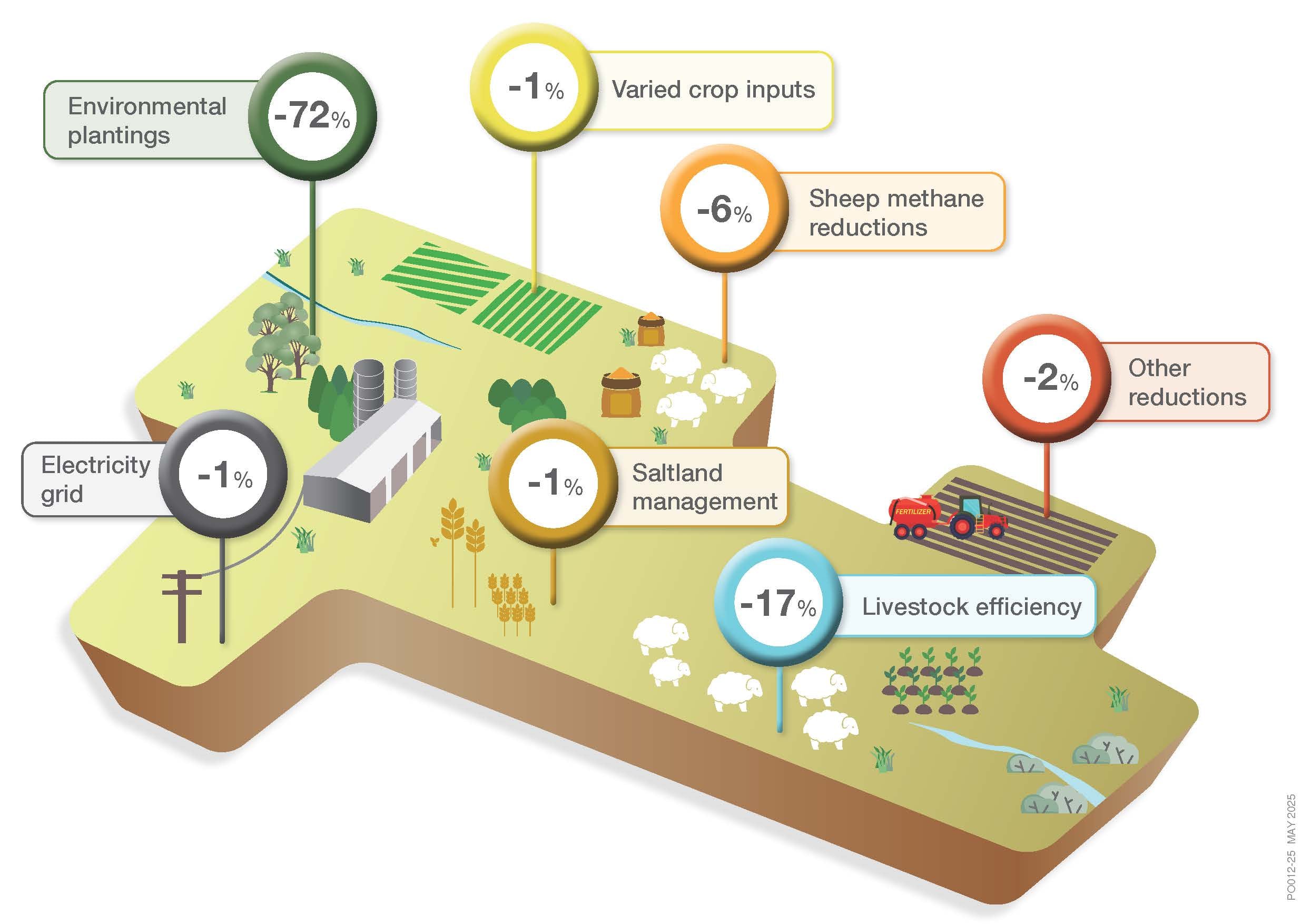
The strategies and their expected emission reductions are detailed in the figure. Through these efforts, a 27.5% reduction in total emissions from the research operation is expected by 2030.
The station staff reduced the total flock numbers by offloading excess stock beyond trial needs and boosting flock efficiency through better joining and lambing practices. These efficiency gains reduced the number of required carry-over lambs, leading to a 17% reduction in livestock emissions in 2021. Further scenarios may have the potential of reducing emissions by a further 9%
Further information is available on improving lambing rates and changing turnoff times to reduce greenhouse gas emissions.
View more on Improving lambing rates and changing turnoff times
Sheep researchers use the feed intake facility and in-paddock methane monitors to measure annual sheep emissions across seasons and diets, aiming to reduce methane with anti-methanogenic feed additives and genetic selection. A number of challenges are still to be resolved before broad adoption of low methane production systems, but significant advancements in enteric methane reductions are rapidly emerging and, when practicable, a 6% reduction is expected around 2030.
To better manage saline land, the department has installed a groundwater drain and 80 hectares of saltbush. While these activities do not directly reduce emissions, the improvement in saline land allows for better pasture growth, which combined with the saltbush will reduce the stations’ purchased feed requirement. The reduced requirement for purchased feed is expected to reduce emissions by only 1% but has significant co-benefits.
The rehabilitation process involved:
- revegetating salt affected land that has poor crop and pasture growth with native trees and shrubs to enhance native biodiversity
- establishing saltland pastures to provide out of season feed for livestock and reduce supplementary feeding
- managing surface water
- groundwater drainage.
Variable rate technology is being explored to optimise fertiliser use. The technology includes real-time data collection, advanced mapping techniques and automated application systems and is expecting a total emission reduction of less than 1%.
The state electricity grid is decarbonising, which will impact the station, cutting the emission footprint by an estimated 0.5%.
Minor improvements in emissions related to fertilisers, chemicals, purchased feed, and crop nitrogen are estimated to result in an additional 2% total emission reduction.
The emission reduction activities are projected to lower the station’s emissions by 27.5%. To reach carbon neutrality by 2030, the station must adopt sequestration efforts to offset remaining emissions. All revegetation at the station has targeted low productivity saline areas while offering shade and shelter for sheep and biodiversity gains. By the end of 2025, 109 ha will be planted, mixing biodiversity and plantation trees. Another 50 ha of plantings are planned for 2026.
KRS is evaluating a range of agave species for their suitability for ethanol, biofuel, soil organic carbon sequestration, and land reclamation on saline non-food producing land.
Carbon neutral pathway
The combination of emissions reduction and sequestration through on-farm plantings will achieve carbon neutral status by 2030. Under this model, net emissions are projected to rise above zero in 2031. To maintain carbon neutrality beyond 2030, ongoing emissions reduction must be achieved or additional vegetation areas planted.