
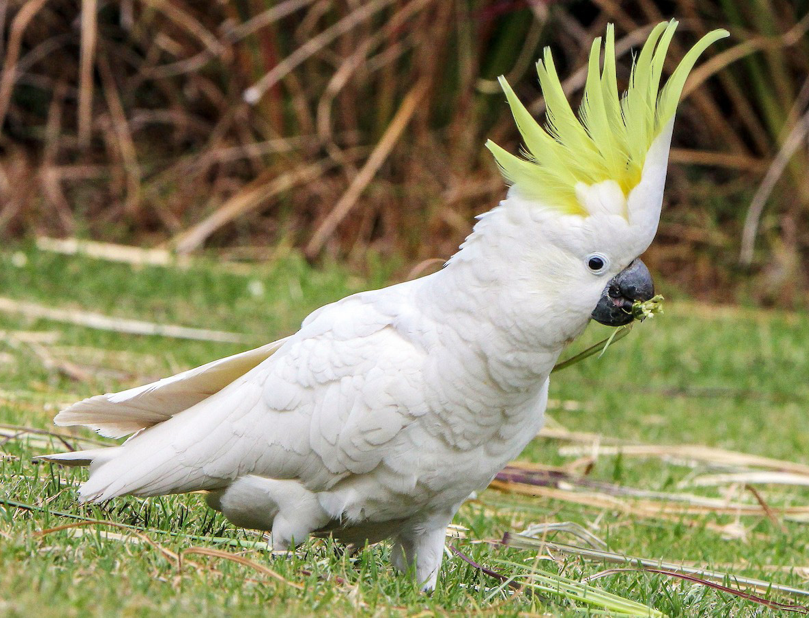
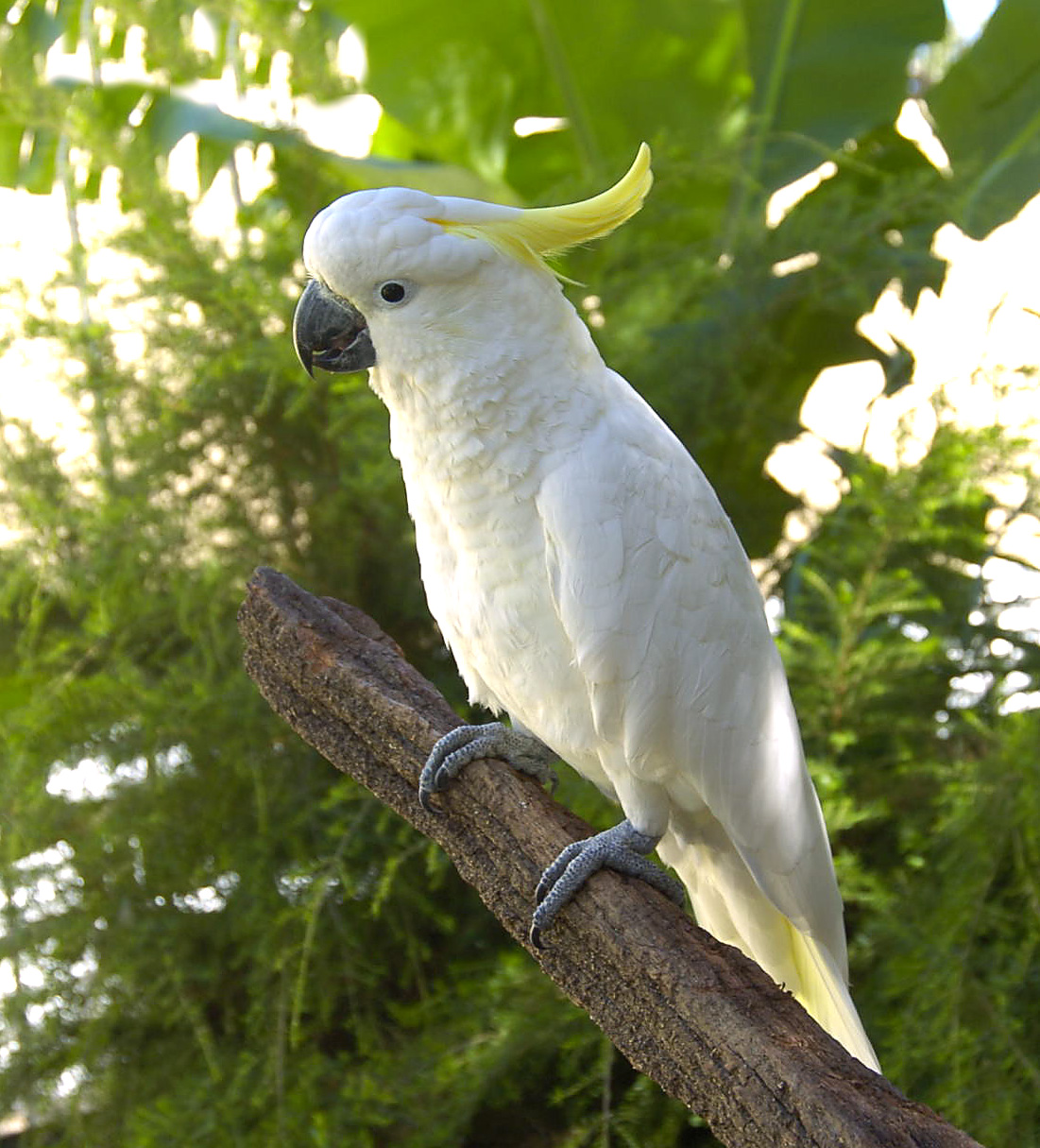
The sulphur-crested cockatoo (Cacatua galerita) is native to eastern and northern Australia including the Kimberley region in Western Australia (WA). Outside its native range in WA, it has become an invasive pest species and may establish wild populations from escaped or deliberately released captive birds.
How to identify the sulphur-crested cockatoo
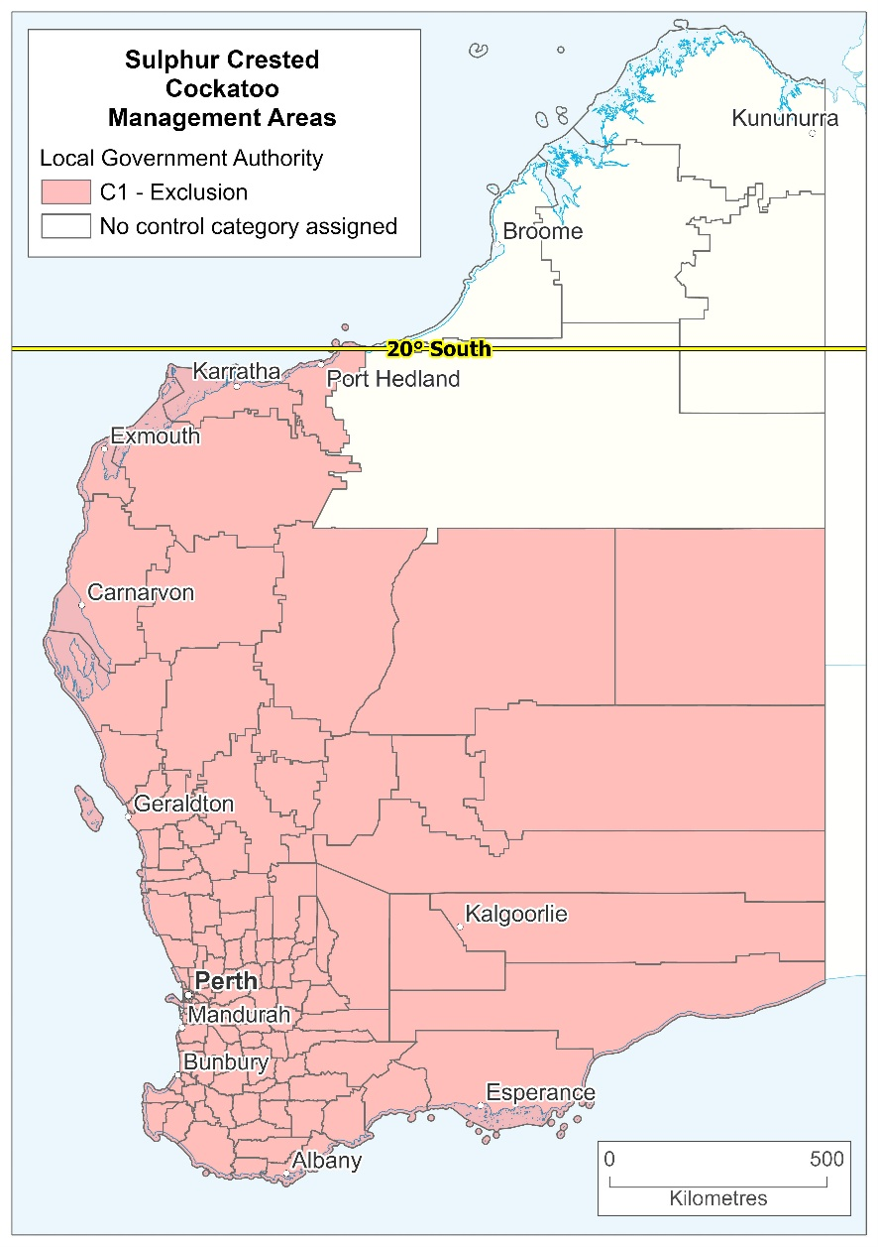
In WA, sightings of sulphur-crested cockatoos in the management areas outside of the Kimberley region (south of the 20° parallel) must be reported to the Department of Primary Industries and Regional Development (DPIRD).
Pest plan
DPIRD has been controlling the introduced birds since 1977 across the Shires of Chittering, Swan, Murray, Mandurah and Waroona. These birds compete with the local native cockatoos and parrots and add further pest issues to the horticultural and agriculture industries.
The department has developed a plan of activities required from 2026 to 2031 to work towards eradication, as this is still considered a feasible goal.
DPIRD recognises that landholders, the broader community, local governments and other state government agencies play a key role in assisting with the detection and eradication of pest birds and will seek support from affected groups to implement this plan.
More information
Sulphur-crested cockatoos are native to northern WA and protected under the Biodiversity Conservation Act 2016 (administered by the Department of Biodiversity, Conservation and Attractions, DBCA) in that region.
Two pieces of legislation enable the control of the cockatoos outside their native range:
- For all areas south of the 20° latitude, the birds are a declared pest under section 22 (2) of the BAM Act and assigned to the control category ‘C1 – exclusion’ (Western Australian Organism List DPIRD). All landholders have a responsibility under the BAM Act to control declared pests on land under their management.
- Under the Biodiversity Conservation Act 2016, the bird is declared 'Acclimatised Fauna', which means that within the south-west land division a person can control the species without first obtaining a damage permit from DBCA.
A permit is required from DPIRD to keep sulphur-crested cockatoos in captivity, in areas outside their native range, i.e. areas south of the 20° latitude, with no restrictions for keeping the birds north of the 20° parallel, as they are naturally occurring there.
A fauna possessing (pet keeper’s) licence is also required under Regulation 36 of the Biodiversity Conservation Regulations 2018, administered by DBCA.
The sulphur-crested cockatoo:
- forms large flocks which damage broadacre, fruit and nut crops, and timber, eats stock feed, stored grain and hay and fouls and damages human infrastructure
- competes with native parrot and cockatoo species (especially, the rare and endangered red-tailed black Carnaby’s and Baudin’s cockatoos) for food and nesting sites
- damages mature trees and solid infrastructure because of the requirement for them to chew to maintain bill condition and length
- is a vector for the spread of diseases, specifically, beak and feather disease
- creates noise pollution at feeding and nesting sites.