
Future Drought Fund (FDF) projects will provide opportunities for regions, farmers and communities to:
- improve their environmental and natural resource management
- adopt new technologies
- diversify their business planning and decision making
- participate in a range of community resilience activities.
The Department of Primary Industries and Regional Development (DPIRD) has partnered with the Commonwealth Department of Agriculture, Fisheries and Forestry (DAFF) to deliver Phase 1 of the Regional Drought Resilience Planning and Farm Business Resilience extension programs, following a successful pilot over 2021-22.
The Commonwealth FDF and WA Government co-contributed funding towards the programs to share drought resilient skills, information and technology so that communities can plan ahead and prosper through a drying climate.

Farm Business Resilience program
The Farm Business Resilience (FBR) program creates opportunities for pastoralists, farmers and Aboriginal organisations across the primary industries to connect with each other and business professionals to improve their farm business resilience.
The program builds the strategic management capacity of farmers/farm and land managers and employees to prepare for and manage risk, adapt to a changing climate and improve the farm business’ economic, environmental and social resilience.
It supports learning in areas including:
- strategic business skills
- risk management
- natural resource management
- personal and social resilience.
The FBR program helps farmers identify gaps in their business strategy and provide them with the tools they need to prepare for, and manage, risk and improve farm business resilience. It also supports farm business planning, tailored to participants’ business and situation, and the opportunity for professional feedback on the plans.
The program delivered the following training:
|
Provider |
Program description |
|
Department of Primary Industries and Regional Development – Aboriginal Economic Development |
Programs include:
|
|
Provider |
Program description |
|
The 2025 BICWA Farm Business Resilience Program workshop participants received one-on-one business coaching to support the development of their own tailored Farm Business Resilience Plan. |
|
Provider |
Program description |
|
Aquaculture for the future training program helps aquaculture businesses navigate the changes ahead and prepare for an uncertain future landscape. |
|
Provider |
Program description |
|
The Agristart program offered a blend of bootcamps, farm visits, expert coaching, and targeted follow-up support. The program included in-person workshops, on-farm advisory visits, peer learning, and flexible online support to help growers strengthen financial literacy, improve business decision-making, and build long-term resilience to climate and market variability. |
|
Provider |
Program description |
|
The FarmElevate Program supported Western Australian broadacre livestock and southern horticulture farm managers and employees to strengthen their economic, environmental, and personal well-being through the development of a Farm Business Plan. |
|
Provider |
Program description |
|
Dairy producers undertook training with:
|
|
Provider |
Program description |
|
Participants across horticulture were empowered with the knowledge and skills to tackle change and anticipate and transform risks and opportunities. 35 participants from this program have been awarded a Diploma of Leadership and Management as a result of completing a detailed FBRP Plan and the program.
|
|
Provider |
Program description |
|
The FarmElevate Program supported Western Australian broadacre livestock and southern horticulture farm managers and employees to strengthen their economic, environmental, and personal well-being through the development of a Farm Business Plan. |
|
Provider |
Program description |
|
LEAFlet is a light version of Landscape Evaluation and Financial Planning course run by the KPCA. Each LEAFlet Plan was tailored to the people and property involved. |
|
Provider |
Program description |
|
College of Extension |
Details to come |
Visit the DAFF website for more information on the program:
Regional Drought Resilience Planning program
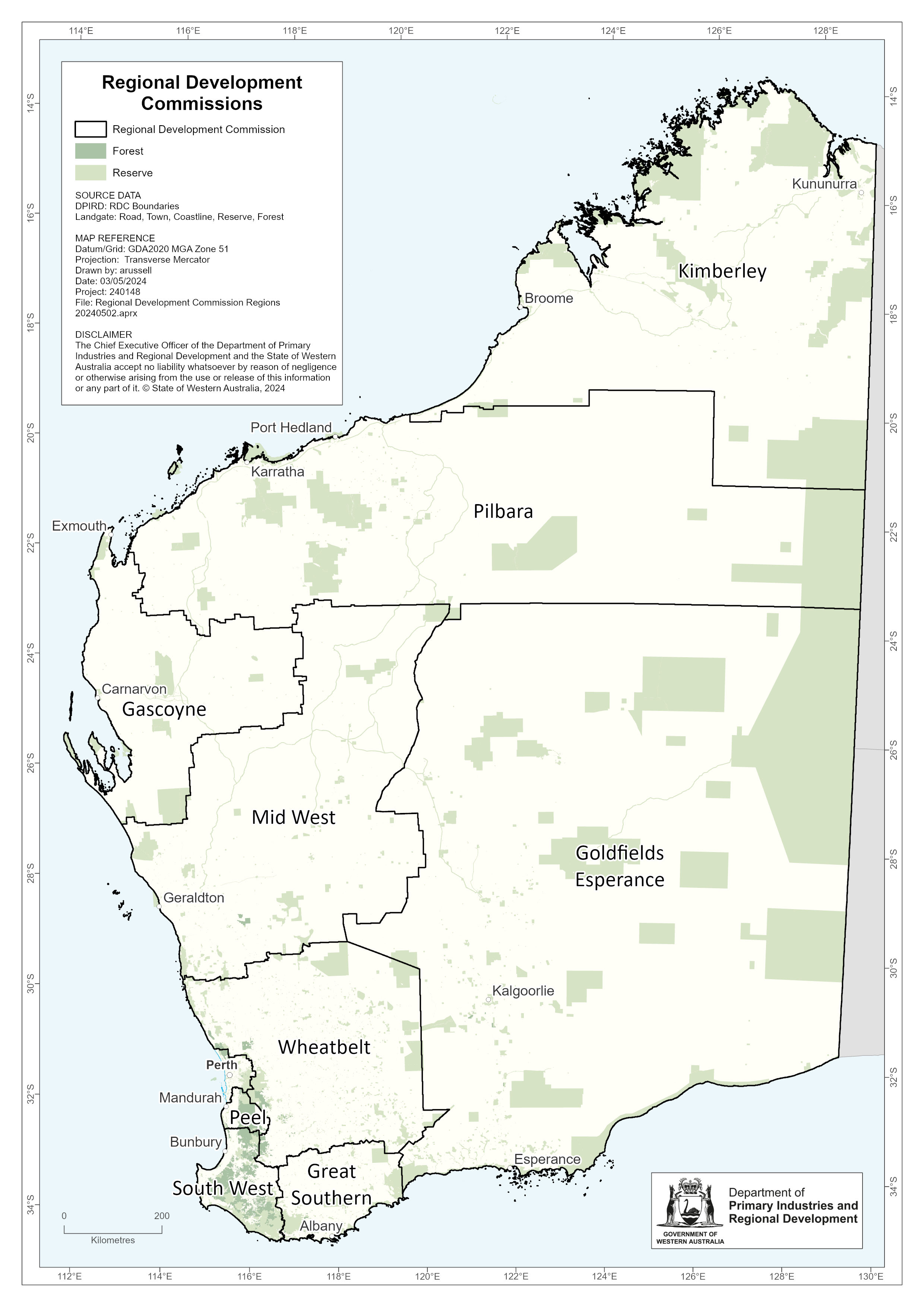
The Regional Drought Resilience Planning (RDRP) program supports Australian agricultural regions in developing plans to manage future drought risks. These community-led plans are created through partnerships among local governments, regional organisations, communities, and industry.
In Western Australia, the RDRP program, delivered by the state government and Regional Development Commissions, began with a foundational year of funding (2020-21) and has been extended through 2024-25.
The plans focus on innovative ways to build regional drought resilience across the agricultural sector and supporting industries.
Find out more about the Regional Drought Resilience Plan for your region:
- Gascoyne Development Commission
- Goldfields Esperance Development Commission
- Great Southern Development Commission
- Kimberley Development Commission
- Mid West Development Commission
- Pilbara Development Commission
- Wheatbelt Development Commission
Visit the DAFF website for more information on the program:
Regional Drought Resilience Planning program
Drought Resilience Adoption and Innovation Hubs
Find out more about Drought Resilience Adoption and Innovation Hubs in the Western Australia's South West and the Northern WA/Northern Territory. Visit the DAFF website for more information about the Drought Resilience Adoption and Innovation Hubs program.
The South-West WA Drought Resilience Adoption and Innovation Hub is led by the Grower Group Alliance (GGA) and supported by a partnership between peak industry representative organisations, natural resource management groups, and the WA Government. The hub builds greater connectivity across WA to drive the uptake of new research and innovation, with collaborative and co-designed projects translating knowledge into practical on ground outcomes.
The SW WA Hub has appointed Regional Node Leads, who provide guidance on priority issues impacting the drought and climate resilience of farming systems, their industries and communities. Node Lead positions are aligned with DPIRD office locations.
Regional Advisory Committees (RACs) comprise skills-based representatives of agricultural industries. They provide guidance to the Hub on priority issues impacting drought and climate resilience of farming systems, their industries and communities.
Charles Darwin University leads the Northern WA/NT Hub supported by core partners including:
- Kimberly Pilbara Cattlemen’s Association
- Northern Territory Cattlemen’s Association
- Northern Territory Farmers Association
- Territory Natural Resource Management (NRM)
- WA Rangelands NRM
- Regional Development Australia
- DPIRD
- NT Department of Industry Tourism and Trade.
The hub collaborates to improve the resilience of farmers, traditional owners, and communities in the NT and WA tropical Top End and rangelands. Centred on pastoral, broadacre, horticulture and forestry systems and water management, the major focus will be on co-creating innovative tools, techniques and practices to support producers and their communities to achieve greater efficiency and sustainability in agricultural lands management. The Hub works closely with the network of existing research farms in the NT and WA.
Contact us
-
Farm Business Resilience Program
-
Regional Drought Resilience Planning