
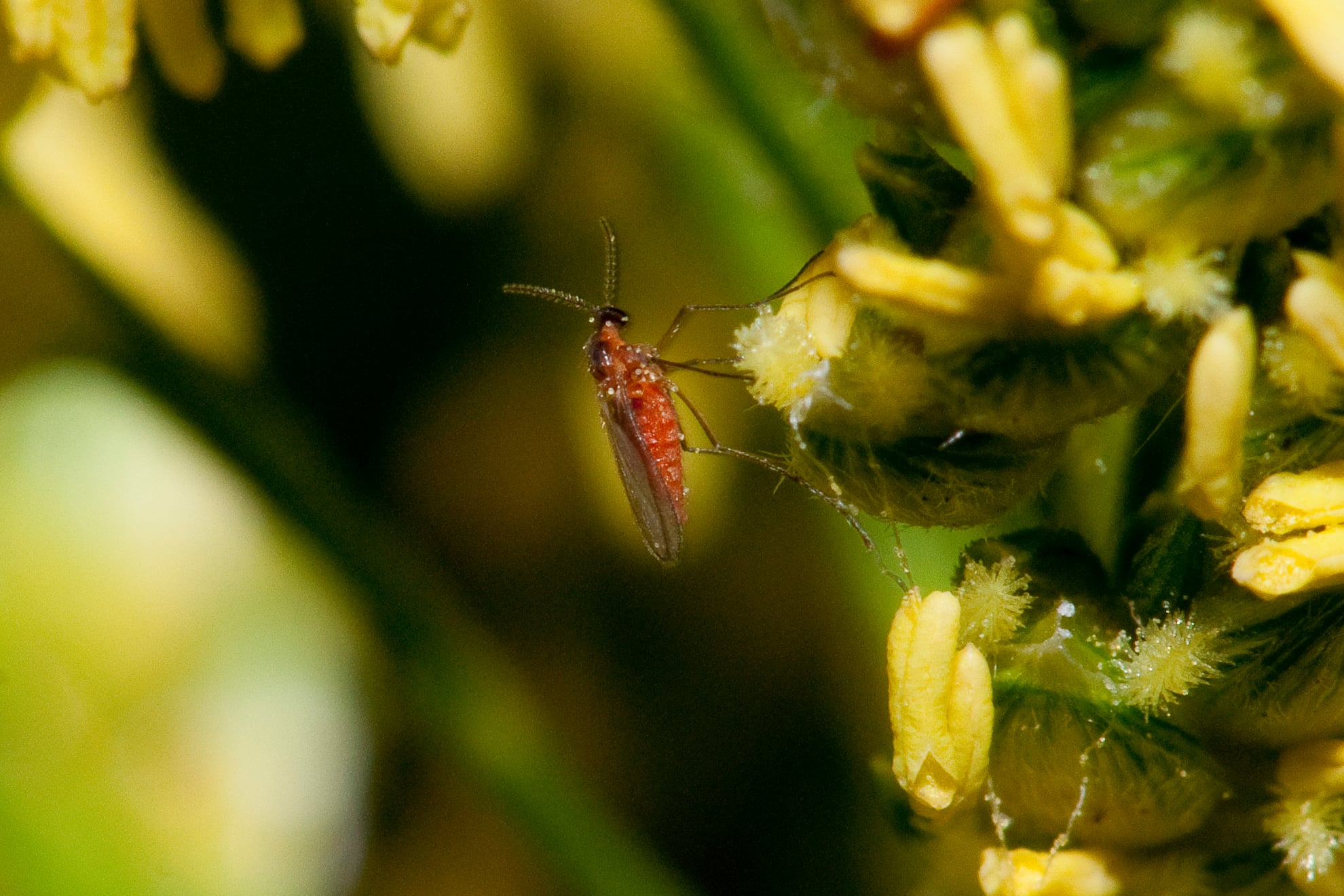
What is Sorghum midge?
Sorghum midge (Contarinia sorghicola) is a small, reddish fly that lives and feeds on sorghum and similar grasses. It is a serious pest of sorghum crops that can cause significant grain yield losses.
Western Australia remains free of this pest. Early detection and reporting of suspected cases will improve chances of eradication and containment to help protect the sorghum industry.
- Sorghum midge adults are very small (1.3-2 mm long), reddish flies.
- After adults emerge, pupal cases may remain attached to the sorghum flowers.
- Damaged sorghum grains may appear shrivelled or malformed.
- Sorghum spikelets may appear chaffy rather than filled with grain.
- Similar damage can be caused by other insects or by poor growing conditions.
Sorghum (Sorghum bicolor), Johnson grass (S. halepense), Sudan grass (S. × drummondii) and wild sorghum.
- Feeding by sorghum midge causes dents or depressions in developing grains.
- Yield losses of around 10-15% can occur, even on midge-resistant hybrid sorghum.
- Sorghum midge is present in in other states and territories of Australia, and is widespread overseas.
- Eggs are laid in the sorghum flowering spikelets, where the larvae develop by feeding on the forming grain and remain protected through to adulthood.
- Pupae survive over winter in sorghum spikelets, emerge as adults in spring, and may be seen from September to June.
- Populations are more likely to increase where sorghum varieties with different flowering times are grown close together.
- Populations may increase on Johnson grass before moving into sorghum crops.
- The pest can spread to new areas through the movement of infested grain.
Sorghum midge is not known to occur in WA.
Contarinia sorghicola is a declared pest under section 12 of the Biosecurity and Agriculture Management Act 2007.
This means that any person who finds or suspects the presence of sorghum midge must report it to DPIRD.
WA's freedom from sorghum midge is supported by surveillance and specific import requirements to prevent its entry.
The Western Australian Organism List (WAOL) provides the status of organisms which have been categorised under the BAM Act 2007.