
Restricted bird keeping and importing
Bird keeping in Western Australia (WA) is regulated to protect our native birds, prevent the spread of disease and prevent damage to the environment and agricultural crops.
The department is responsible under the Biosecurity and Agriculture Management Act 2007 (BAM Act) and Biosecurity and Agriculture Management Regulations 2013 (Regulations), for the regulation and management of keeping restricted birds in WA.
There are more than 80 exotic bird species regulated as restricted keeping and require permits to be kept legally. View the full list of restricted birds and guidelines to importing and keeping regulated animals in WA, which include the cage requirements for each restricted species.
Search the WA Organism List (WAOL) for information on species not contained in this list and refer to the permit conditions section for additional information.
Do not make bookings for the transport of birds and other animals that require an import permit until the permit is issued.
Permits are required to import and keep introduced or exotic bird species in WA. These birds are identified as declared pests in WA.
1. Complete the application form (including a copy of your identification and supporting photos/documentation if applicable).
- Submit to DPIRD via:
- email to RKPapplications@dpird.wa.gov.au
- or mail to:
- ISEB Restricted Keeping Permit Team, Department of Primary Industries and Regional Development, Locked Bag 4, Bentley Delivery Centre 6983
- The application form captures important information that allows the department to assess the application to keep restricted bird species safely in WA.
- Please note that inspections may be required for new, renewal or amendment applications.
2. Pay the application fee ($84.34)
- Application fees are charged on a cost recovery basis; they are non-refundable and must be paid whether the application is approved or refused.
- Application invoices will be issued within 5 working days from receipt of an application form.
- Applications will not be processed until the application fee is paid in full.
- Application fees not paid after 90 days will be deemed as being withdrawn and applications will need to be re-submitted.
3. Pay the inspection fee ($79.95 - if applicable)
- Inspections are required for all new applications and may be required for renewal or amendment applications.
- This renewal/amendment requirement will be determined based on the amendment being requested and/or the number of renewal applications which have previously been approved.
- Inspection fees are charged on a cost recovery basis; they are non-refundable and must be paid whether the application is approved or refused.
- Inspections are undertaken to ensure keeping standards are met. Keeping standards are in place to minimise the risk of an exotic or restricted species escaping and potentially establishing in the wild, damaging agricultural crops, displacing and competing with native animals and plants, carrying disease or parasites, damaging property, causing land degradation and having a negative impact on pets and native species.
- Applications will not be progressed until the inspection fee has been paid in full (if applicable).
4. Application assessment undertaken
Assessment of all information provided in the application form, including supporting photos and documentation..
5. Inspection undertaken (if applicable)
- An Authorised Officer will make contact with the applicant to arrange a suitable date and time to conduct the inspection.
- If an inspection identifies a non-compliance issue or an improvement to keeping standards, additional inspections may be required. DPIRD will work with applicants to meet keeping standards where possible.
6. Permit issued
- If all components are met successfully, a 5-year permit will be issued.
- Applications will be processed once payment has been received. Invoices will be issued within 5 working days from receipt of application. Once payment is received, applications will be assessed within 30 working days.
- These timeframes are reliant on the quality of information provided in the application. If an inspection is required, the process may take longer.
- The above timeframes are indicative only.
Further information
- For further information about the application process, see Guidelines for restricted bird keeping applicants.
- For further information about fees and charges see Agriculture and Food Services, Products and Fees 2026-27.
- Also see Frequently Asked Questions below.
Why do I need a permit?
Under the Biosecurity and Agriculture Management Act 2007 (BAM Act) and Biosecurity and Agriculture Management Regulations 2013 (Regulations), DPIRD is responsible for regulating and monitoring prohibited declared bird speciesin WA. This is managed through issuing permits to import and keep.
Permit holders are responsible for the declared bird species being kept. This includes maintaining the standards of the aviary or enclosure in accordance with the permit conditions to minimise the risk of birds escaping and potentially establishing in the wild.
What is a ‘Keeping’ permit?
There are more than 80 exotic bird species classified as ‘restricted’ which require permits to be kept legally. These birds are identified as declared pests in WA and are monitored to reduce the potential of escape into the wild.
The permit identifies keeping categories and conditions to keep declared pests, regulates the purposes for which they can be kept, and who can keep them for that purpose.
Why am I only allowed a certain number of birds?
Placing a limit on numbers held at a location reduces the risk of many individuals of one species escaping or being released into the wild at one time. The risk of establishment in the wild increases with the number of birds released in one event.
How much does a permit cost?
Two payments may be required when applying for a permit – an application fee and an inspection fee.
The cost for an application is $84.34; it is charged on a cost recovery basis; it is non-refundable and must be paid whether the application is approved or refused.
Applications will not be processed until the required fee is paid and all required information has been provided.
Invoices for application fees will be issued within 5 working days after receipt of an application.
The cost for an inspection is $79.95; it is charged on a cost recovery basis.
Inspections will typically be undertaken for new applications and will be charged on the same invoice as the application fee. Inspections for renewal or amendment applications will be determined based on the nature of the amendment, and/or the number of permit renewal applications that have previously been approved.
If an inspection identifies a non-compliance issue or a requirement to improve keeping standards, additional inspections may be required, and applicants may be further charged.
Applications will not be processed until the required fee(s) is paid in full. Invoices not paid after 90 days will be deemed as being withdrawn and applications will need to be re-submitted.
Applications and inspections are charged for on a cost recovery basis as detailed in the Agriculture and Food Services, Products and Fees 2026-27.
What birds do I need a permit to keep?
See the list of restricted bird species for further information.
Why must my property be inspected?
Inspections are undertaken to ensure keeping standards are met. Keeping standards are in place to minimise the risk of an exotic species escaping and potentially establishing in the wild, damaging agricultural crops, displacing and competing with native animals and plants, carrying disease or parasites, damaging property, causing land degradation and having a negative impact on pets and native species.
Aviary inspections are typically undertaken for all new applications and for permit renewals or amendments, inspections will be determined based on the nature of the amendment, and/or the number of permit renewal applications which have previously been approved.
Do I still need to obtain a permit for keeping native birds?
For native species, including specially protected fauna, a Fauna Possessing (Pet Keeper’s) Licence is required from DBCA. Some native birds can be declared species and they also require a restricted keeping permit - check the restricted bird species list or search the WA Organism List if unsure.
What if I want to sell or rehome my restricted bird?
Restricted keeping species can only be sold or transferred to other current permit holders who have a permit to keep the same species.
Advice on options for rehoming unwanted restricted birds is available by emailing RKPapplications@dpird.wa.gov.au
A person who releases or fails to take reasonable precautions to prevent the escape of a declared pest, commits an offence and can be subject to fines under the Biosecurity and Agriculture Management Act 2007.
Can I transfer my permit?
No. A permit is not transferable to another person or party. A permit is specific to the species and location written on the permit.
What happens if I keep a restricted bird without a permit or don’t comply with keeping standards?
An approved permit is required for all regulated bird species.
If your application form is incomplete or your aviary inspection (if applicable) does not meet keeping standards, a restricted keeping permit will not be issued. In this instance, you can work with DPIRD to ensure the keeping standards can be met and maintained, or you can decide not to proceed with the application and therefore cannot keep a restricted bird species.
If you do not meet keeping standards but decide to keep a restricted species without a permit, compliance action will be taken against you. Compliance activities can include the seizure of regulated birds, the issue of Pest Keeping Notices or Pest Control Notices, the withdrawal of permits, and possible judicial proceedings.
How do I report illegal bird keeping?
Report illegal bird keeping via Ag Watch Report form • Crime Stoppers Western Australia or by contacting the Restricted Keeping Permit Team via email rkpapplications@dpird.wa.gov.au or on (08) 9368 3393.
What are the keeping standard requirements?
Keeping standards vary depending on the species being kept. Download the Guidelines to importing and keeping regulated animals in Western Australia can be downloaded. This provides information about the regulation and keeping requirements for all the restricted bird species.
There is a requirement for all aviaries to have a double door. When an aviary is inside a dwelling this is met through the aviary door, and interior and/or exterior doors of the dwelling; an aviary outside must have an antechamber to meet the double door requirement.
Can I import birds from interstate?
Yes. However, an import permit and a restricted keeping permit is required.
What is the transitional period from DBCA to DPIRD?
DPIRD will assume issuing of restricted keeping permits from 1 December 2025.
DPIRD will work with current non-compliant permit holders, to improve their aviaries and/or enclosures to meet legislative requirements. Time to do this will be decided on a case-by-case basis but will typically have a maximum period of 28 days. This may be extended in extenuating circumstances.
Can I keep my aviary inside?
Yes, you can keep your aviary inside as long as it meets keeping standards and permit conditions (please see Guidelines to importing and keeping regulated animals in Western Australia for keeping standard conditions).
Which species must be kept in an outdoor aviary?
There are no specific species which must be kept in an outdoor aviary. The keeping standards and conditions must be met whether the bird is kept in an aviary inside or outside.
Why must I have an antechamber on an outdoor aviary?
The requirement for an antechamber for all outdoor aviaries is to minimise the risk of birds escaping. Antechamber doors should be closed after entry to ensure there is always a closed door to prevent escape.
Why must my outdoor aviary be secured?
All aviary doors must be secured. Outdoor aviaries must be suitably secured to minimise the risk of damage from inclement weather or accident where the aviary could be knocked over allowing birds to escape.
How do I report an aviary escape?
Please report all aviary escapes to DPIRD at RPKapplications@dpird.wa.gov.au or on (08) 9368 3393.
The following are typical conditions which apply to restricted keeping permits:
- Birds kept under this permit must only be disposed of to a person holding a current restricted keeping permit for the species listed on this permit.
- The permit holder must not place birds kept under this permit into the care of another person (other than a veterinarian) except as authorised under a permit.
- The permit holder must report the loss, theft or escape of any bird held under this permit to the Department within 24 hours, to RKPapplications@dpird.wa.gov.au
- This permit must be produced and shown if directed by a person authorised by DPIRD and/or authorised under the Biosecurity and Agriculture Management Act 2007.
- An audit of species held under this permit must be provided when requested by the Department: The audit must list each species and the number held of each species.
- Birds kept authorised under this permit must be kept in aviaries and/or enclosures constructed with double doors to the exterior to prevent birds escaping when the aviary is accessed.
- Birds kept inside a dwelling under this permit, must live in a fully enclosed bird cage that has a lockable door. The cage must remain behind doors inside the house to maintain a double door status at all times.
- Any birds kept under this permit must not be permitted to walk or fly outdoors.
- Outdoor aviaries and enclosures must be securely fastened to a concrete base or pegged to the ground, with netting and post uprights buried a minimum of 300 mm into the ground; wire netting must be laid under any breakable sheet coverings such as PVC or fiberglass.
- Outdoor aviaries and enclosures must have correct load bearing structural materials within the framework of the aviary. Approved minimum sizes for various materials: timber 50 x 50 mm, angle iron 25 x 25 x 3.17 mm, and steel rod 12 mm internal diameter.
- Aviary constructions and enclosures must meet the following minimum standard approved for each species:
- Golden-capped conure, Golden parakeet, Jandaya conure, Meyer’s parrot, Moustached parakeet, Pacific parrotlet, Peach-fronted conure, Red-crowned parakeet, Sun conure and Yellow-crowned parakeet must be kept in aviaries or enclosures constructed with no larger than 25mm mesh with wire diameter of 1.3mm.
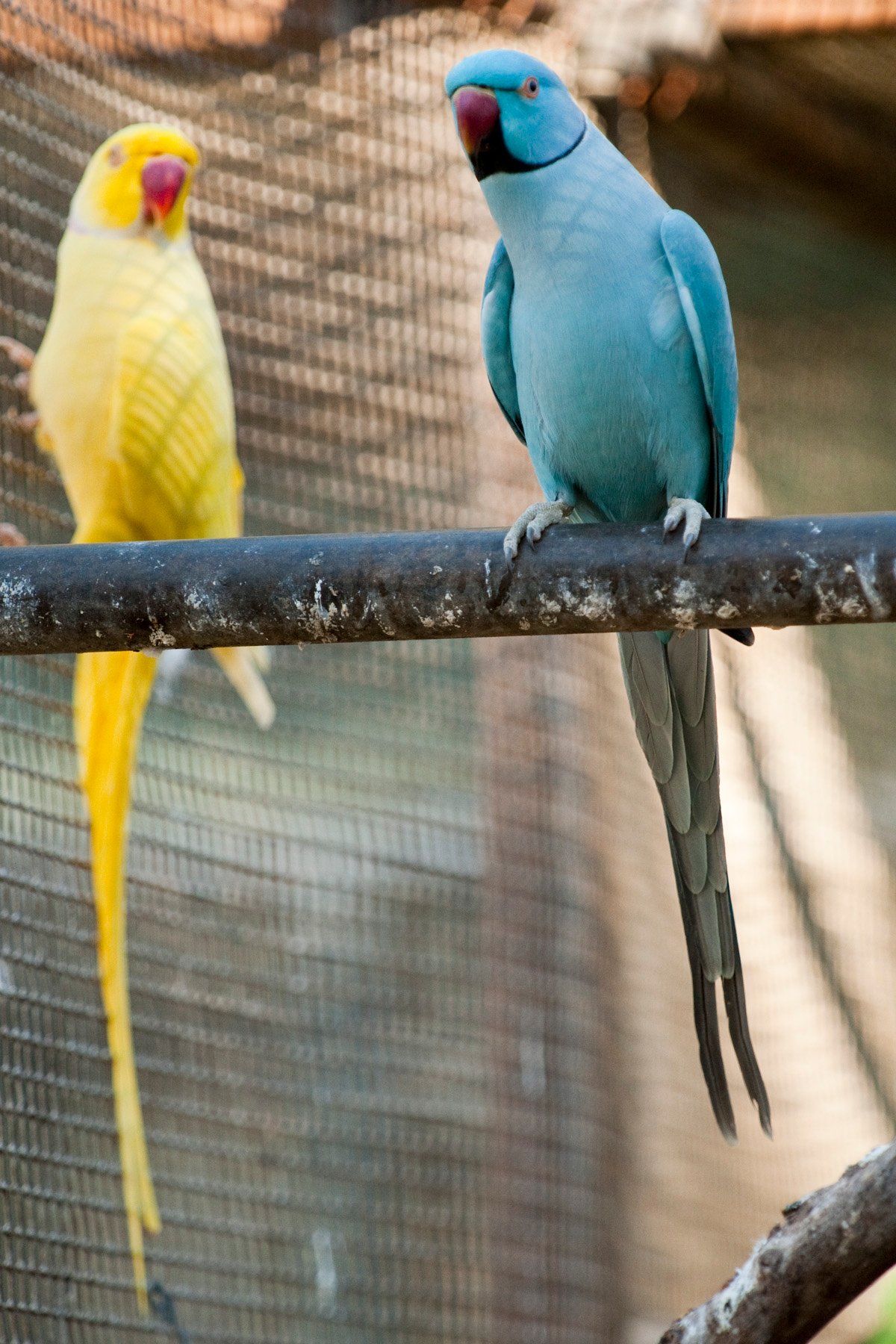
- Alexandrine parakeet, Black-headed caique/parrot, Derbyan parakeet, Dusky lory, Eclectus parrot, Malabar parakeet, Plum-headed parakeet, Rose-ringed parakeet and White-bellied caique/parrot, Yellow-collared macaw and Yellow-streaked lory must be kept in aviaries or enclosures constructed with no larger than 38 mm mesh with wire diameter of 2.5mm.
- Blue-and-yellow macaw, Hyacinth macaw, Red-fronted macaw, Red-and-green macaw and Scarlet macaw, must be kept in aviaries or enclosures constructed with no larger than 50 mm galvanised weldmesh with wire diameter of 3.1 mm.
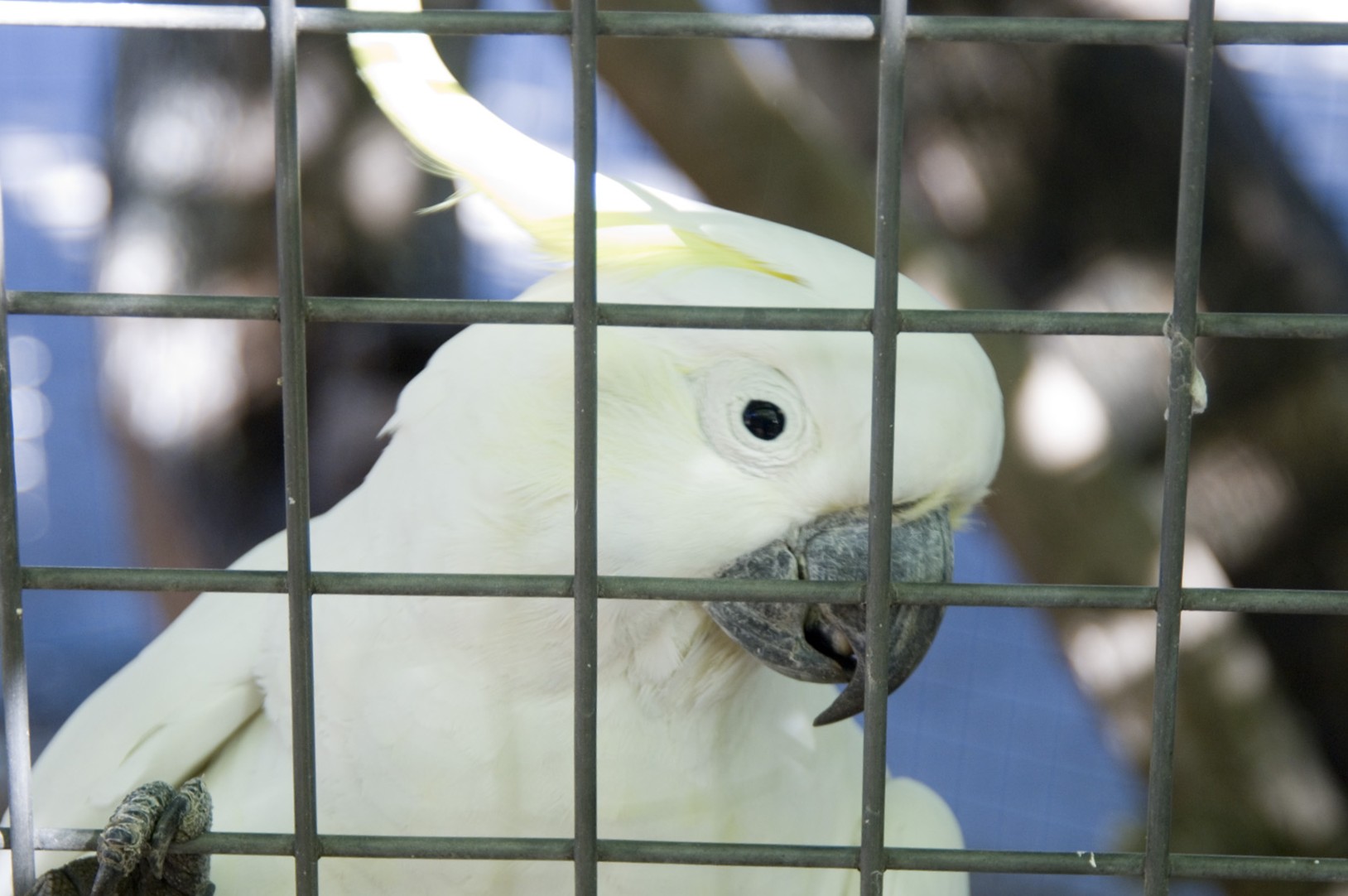
- Sulphur-crested cockatoo must be kept in aviaries or enclosures constructed with no larger than 50 mm galvanised weldmesh with wire diameter of 3.1 mm.
- Passerine species must be kept in aviaries or enclosures constructed with no larger than 12 mm mesh with wire diameter of 0.7 mm.
- Chukar partridge, Greater rhea, Ring-necked pheasant and Silver pheasant, must be kept in aviaries or enclosures constructed with no larger than 38 mm mesh with wire diameter of 1.3 mm.
- Egyptian goose, Eurasian collared dove, Mandarin duck, Namaqua dove, New Zealand scaup, Paradise shelduck, Ruddy ground dove and Superb fruit dove must be kept in aviaries or enclosures constructed with no larger than 25 mm mesh with wire diameter of 1.3 mm.
- Japanese quail (Coturnix japonica) must be kept in aviaries or enclosures constructed of 7 mm square mesh.
- The number of birds of each species kept under permit must not exceed the following maximums for each bird group, and applies to aviaries and indoor bird cages:
- The number of each cockatoo and parrot (Psittacidae) species, excluding lovebirds, authorised by this permit must not exceed 10 birds for the location specified.
- The number of each lovebird species authorised by this permit must not exceed 20 birds for the location specified.
- The number of each Passerine species authorised by this permit must not exceed 20 birds for the location specified.
- The number of Greater rhea authorised by this permit must not exceed 10 birds for the location specified.
- The number of Chukar partridge, Egyptian goose, Mandarin duck, New Zealand Scaup and Paradise shelduck authorised by this permit must not exceed 30 birds.
- The number of Eurasian collared dove, Namaqua dove, Ruddy ground dove, Superb fruit dove, Ring-necked pheasant and Silver pheasant authorised by this permit must not exceed 20 birds.
Contact information: RKPapplications@dpird.wa.gov.au
To prevent escapes, aviaries and enclosures that house restricted birds must have double exterior doors and meet specific wire and mesh standards for different species.
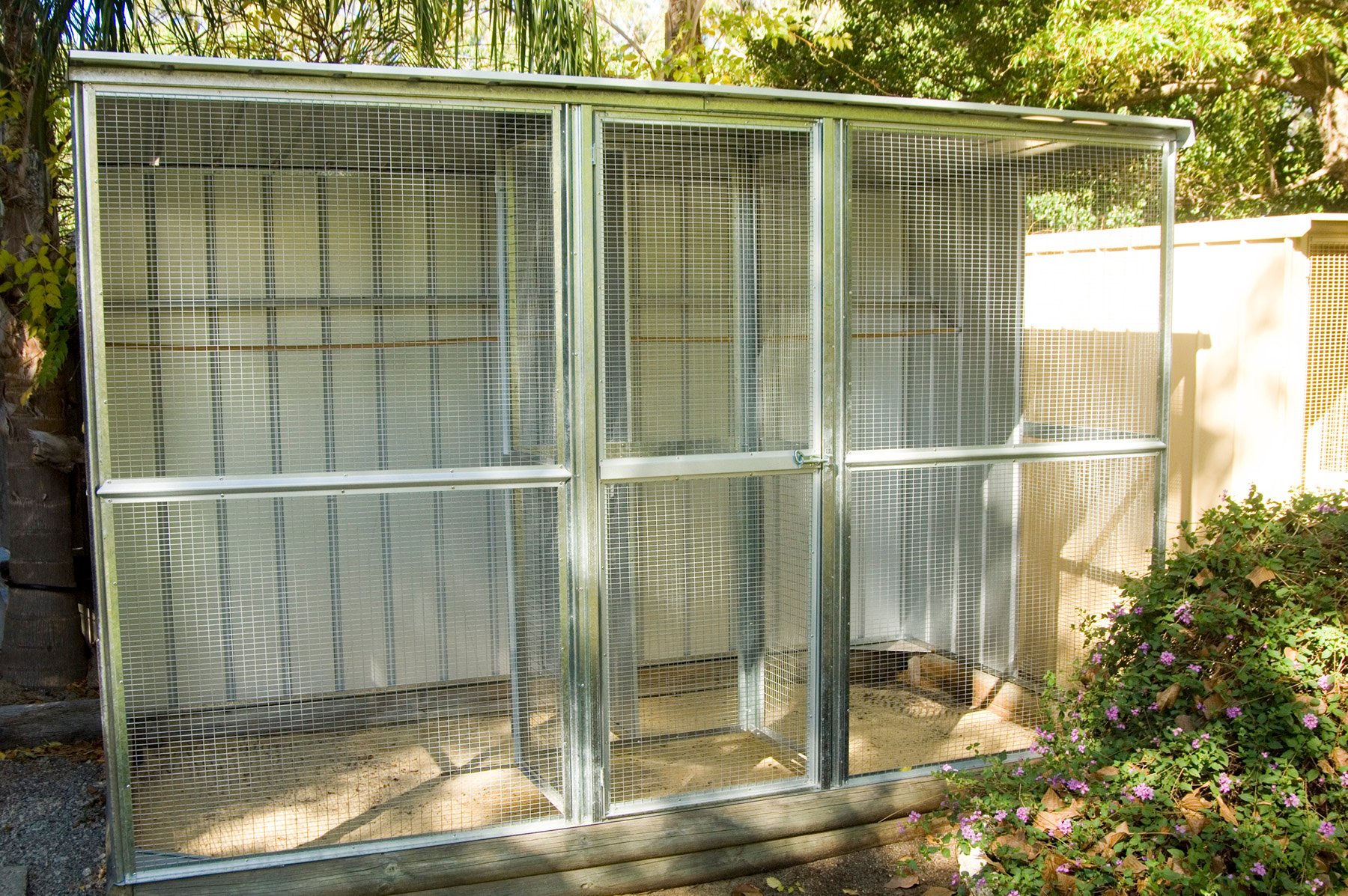
The double door requirement for aviaries kept inside a dwelling are met through the aviary door, and any internal and external doors of the dwelling. Aviaries or enclosures kept outside, must have an antechamber to meet the double door requirement. All aviaries must be secured with a padlock or similar locking mechanism.
Find out more in the Guidelines to importing and keeping regulated animals in WA.
Import permits and keeping - all other restricted animals
Use the relevant application form, available on the Import permit application forms page under the sub-headline, Permits to deal with declared pests or potential carriers.
Invasive species permits require payment prior to the permit being processed.
- Print completed applications and email to ISpermit@dpird.wa.gov.au.
- An invoice will be emailed back to you. For invoice enquiries, email the department’s Invasive Species and Environment Biosecurity administration officer at admin.invasivespecies@dpird.wa.gov.au.
- Pay the invoice.
- On confirmation an application fee has been paid, the permit application will be processed.
- The permit will be forwarded to the applicant once the application has been approved.
Allow 4 weeks for permit applications to be processed.
Import permit application forms
How to submt your application:
Submit your completed application for assessment by one of the following options:
- Email it to ISpermit@dpird.wa.gov.au or
- Post it to:
Attention: Invasive Species Permits
Invasive Species and Environment Biosecurity
Department of Primary Industries and Regional Development
Locked Bag 4 Bentley Delivery Centre WA 6983
Registered pesticides
Registered pesticide (RP) permit applications and amendments
Fees and charges
For a list of applicable charges, refer to the Fees and charges page.